

1. Write A Damn Good Personal Statement
Your personal statement should communicate three things: Who you are, What you’ve done, and Why your application should be considered and accepted. Reading some examples, (there are a million online), is a great place to start, but if you borrow anything or even paraphrase, readers will know. When you have to read through a huge stack of personal statements you get good at spotting who actually put in the work and who just modified a template they found on the internet. Think of your personal statement as a story — a short story but a story all the same. Schools are looking for more than just grades, so let your youness come through… to a point. Some advice we received from Jill Ferguson, Manager of Career Development at the University of Guelph, is “Share, Don’t Scare.” Be personal, but don’t write about personal issues that it would make the reader uncomfortable. And if your grades — especially your grades in first year — aren’t great, talk about that. Talk about your strengths and your weaknesses and explain what happened, how you’ve grown, and why any potential issues in your transcript or application aren’t actually issues at all.
2. Actually Be Interested
This should go without saying, but if you’re not enthusiastic about your field of study, don’t study it. There are aspects of any program that are a bit meh — it’s the same for jobs — but if you are feeling just lukewarm about a grad program even while you’re applying, you have to ask yourself whether it’s really where you want to spend the next several years of your life. Applicants who really engage with their subject, who’ve gone out of their way to do the research on their program (who teaches there, what the courses are like, etc.), demonstrate a passion and excitement that makes their applications stand out. Put in some leg work, reach out to the school, to the facility, to current students, to student groups; talk to people, ask questions, get a sense for the vibe of the program, and do what you can to show that you really are interested. Think of it like dating: don’t be creepy, ask them about themselves, and show a genuine interest.
3. Choose Referees Who Know You
For most applications, you will be required to provide a couple of letters of reference from professors you’ve worked with. If a professor doesn’t know you — actually know you and your work — don’t ask them for a reference. The point of a reference is to provide information about you and your academic achievements, and if you ask someone who can’t speak to the particulars of you, then you’re wasting everyone’s time. A good approach is to ask a professor you know if they are able to write you a positive reference. Framing it like that makes your expectations clear and gives them an opportunity to honestly say yes or no. And if they do say no, then they say no. Respect their decision. Don’t bother them about it. They don’t need to give you a reason. Go ask someone else. Also, and this cannot be stressed enough, do not put off finding your referees and confirming that they can do it. Ask them early, super early, as early as you can. Don’t put it off.
4. Have A Plan For The Money Stuff
Does the grad program come with a TA or research position? Is your program full or partially funded? Grad school can be expensive. While costs are different for every program and from school to school, it is essential that you do your research. Are scholarships available? Will you need to apply for external funding? When are those applications due? Scholarship and external funding applications don’t necessarily line up with applications for grad school, so again, do your homework. Look into which programs offer TAships. Look into the cost of living for the city where the school is. If the program you apply to does come with some funding, think of it a bit like your salary, as something you can negotiate (at least a little). If you get accepted to multiple grad programs, make that known. There is nothing wrong with telling School X that School Y is giving you a funding package and seeing if they can match it. Maybe they can’t, but at least you asked.
5. Don’t Do It
If you do not want to do grad school, then do not go to grad school. Grad school is fun, for many, it’s more fun than undergrad because it’s more focused and the work is actually kinda cool, but grad school is by no means required for many careers. Consider where you want to end up, career wise, and let that guide your decision-making process. While grad school certainly brings a lot of opportunities, it can also be a huge expense, and if you don’t need to go, or you don’t want to go, then don’t go. There are plenty of other options, college programs and certificate programs, and there’s also, you know, work. People think that a graduate degree will make finding a job easier, but this isn’t always true. There are resources that are there to help you get yourself pointed in the right direction — career counselors, on-campus student Career Services — use them. And remember, there’s no rush. If you have no idea what you want to do, that’s fine. If you want to go work for a bit and leave academia behind, go for it. Grad school isn’t the only option and it’s also not going anywhere. A decade from now you’ll still be able to get your MBA. There’s nothing wrong with living a bit of life first.

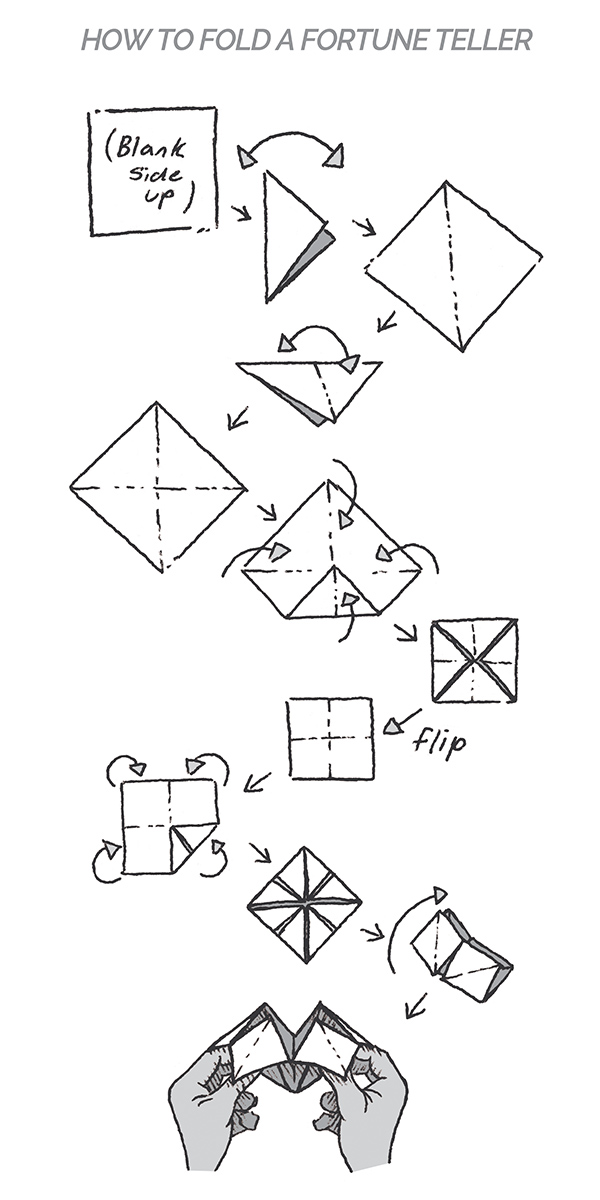
Graduating soon and have no idea what to do with yourself? In first year and still not entirely sure why you’ve signed up for this degree? Halfway through and seriously questioning your commitment? Never fear! Making big choices may be harder than ever in the 21st century, but The Ontarion has you covered. Simply download, print, and fold our complimentary fortune teller! Pick a colour and a number, and let chance determine your next move — no nail biting required. Who knows, you may get some much-needed inspiration, a potential path you hadn’t thought of, or a gut reaction that will teach you something about yourself and what you truly want to do.
Disclaimer: You understand your own life best. This advice is in the spirit of good fun only. Make informed choices.