
Navigating “the bogey man of clashing colors”
Ryan Kirkby | Project Archivist
The Ontarion has invited writers from the Library, Archival & Special Collections to share stories about the unique pieces housed in the collection. Join us as we explore these fascinating, beautiful, scandalous, and weird bits of history. The items written about in this article are available for consultation in the A&SC Reading Room on the 2nd floor of McLaughlin Library.
I
n any ordinary year (and this is no ordinary year!), the earliest signs of spring are often met with thoughts of gardening. Whether for the love of it, or out of obligation, gardening remains a popular diversion for Canadians, despite its tendency to vex even the most seasoned expert. To navigate these challenges, many of us look to websites, blogs, and gardening apps for advice. But in an earlier period, long before the advent of the internet, how-to manuals written by landscape architects and horticulturalists were the guide of choice for hobbyists.
How-to manuals carry an air of fascination perhaps not always appreciated by the casual reader. Rich with subtext, they embody the aspirations, fears, and desires of their time and place. Handbooks like Norman A. Morris’s Your Book of Garden Plans (1946) and Franc Daniels’s You Can Landscape Your Own Home (1949), both recent acquisitions to A&SC’s Landscape Architecture Collection, are no exception. Marketed to a growing cohort of first-time homeowners in the wake of World War II, these manuals served as an introduction to the principles of landscape design as well as an entry point to middle-class comfort.
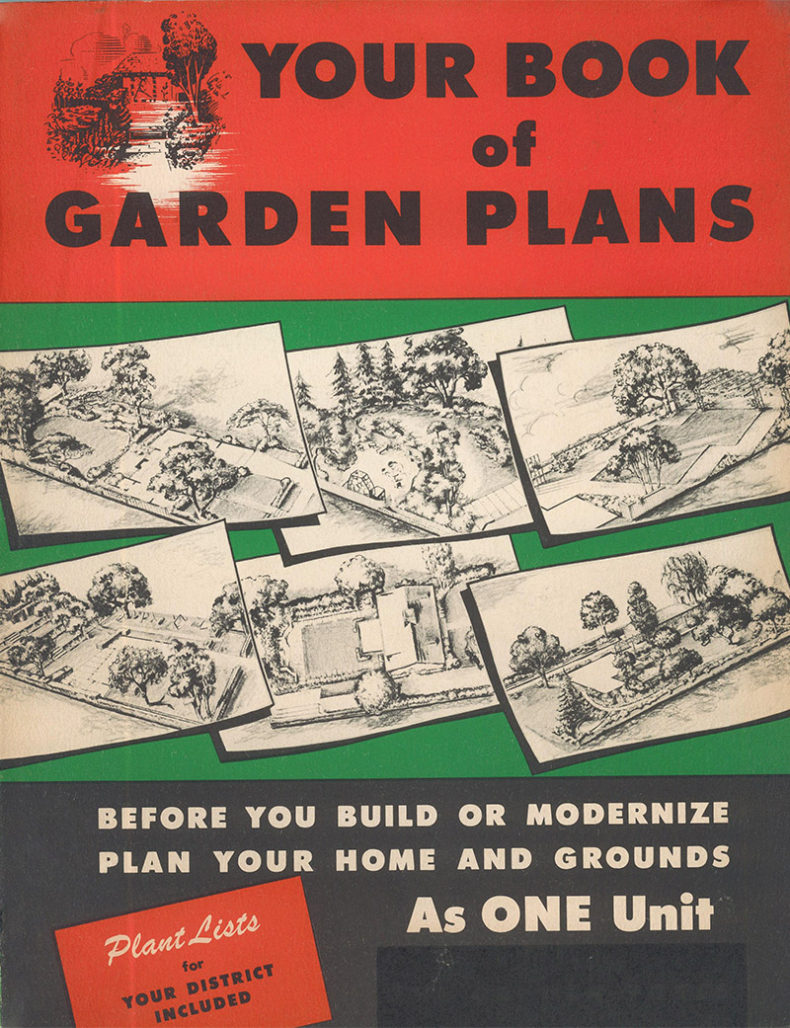
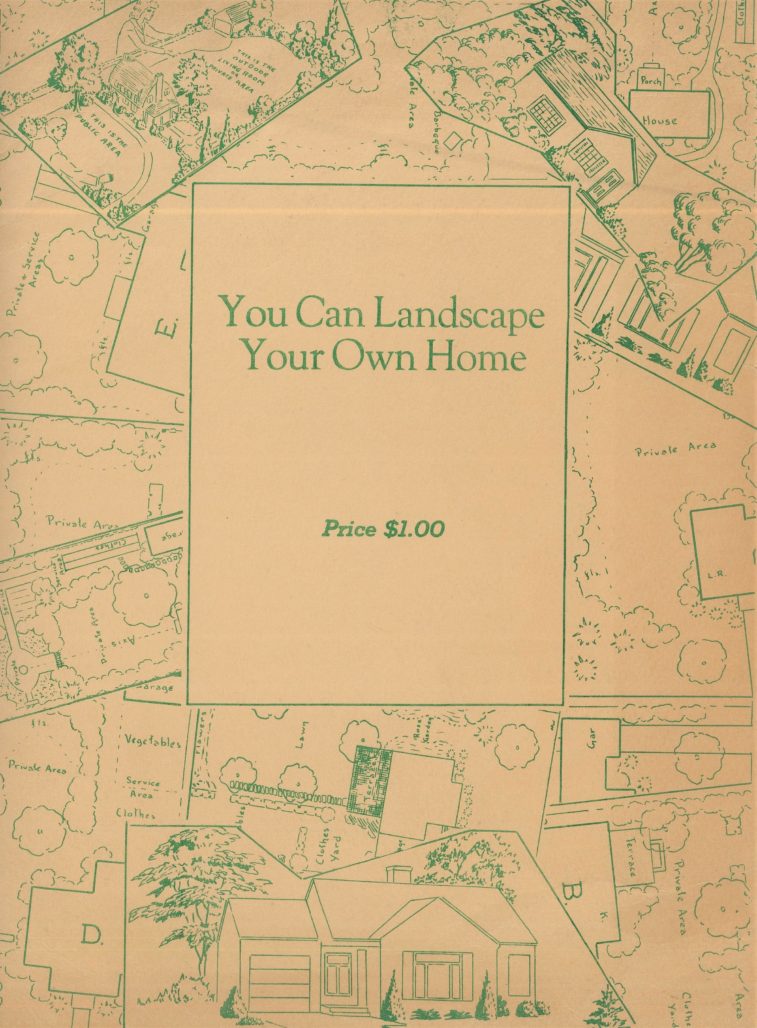
Like the etiquette manuals and marital sex guides of the first half of the twentieth century, and the self-help-inspired mindfulness literature and DIY blogs of today, postwar landscaping handbooks for suburban homeowners conveyed a set of rules, regulations, and ambitions rife for inquiry.
The elements of design articulated in each manual are an obvious source of intrigue for the green-thumbed researcher. “Keep the lawn open (except for trees), and group other materials in informal arrangement along the borders of the lawn area,” Daniels advises. “Cluttering up your lawn reduces its apparent size and gives you more work in maintaining it.” On the matter of flower planting, Morris tells his readers: “Don’t bother too much about color combinations. Theory here is far advanced, and you can spend years accumulating knowledge on the subject. The bogey man of clashing colors is much overdone as far as flower plantings are concerned for the ever-present green foliage has a great softening effect.”
The pragmatism of such advice was accompanied by words of encouragement for the novice landscaper. “So you want to Landscape your own home?” Daniels begins. “We wish you luck! And you can have ‘luck’ if you follow certain basic rules.” Like any how-to manual, the intention was to establish a program for success. “The rules are simple,” Morris assures. “Come along and enjoy gardening at its best.” He even promised “utopia” for those who successfully followed his four-step design path.

Confidence building, however, is only part of their story.
Beyond providing a record of the aesthetics of landscape design in the immediate postwar period, these manuals say much about the culture of the times as well, often in ways unanticipated by their authors.
By the early twentieth century, most middle-class men were earning a living in white collar occupations, a trend that continued into the postwar period. Do-it-yourself projects, including landscaping manuals, offered therapeutic approaches for easing the alienation these men sometimes felt working in large corporate bureaucracies. But as Daniels’s and Morris’s booklets show, it was not uncommon for DIY projects to mimic the very managerial culture they promised refuge from. Indeed, inherent in their rules and regulations for proper landscape design was a drive toward order and perfection characteristic of much white-collar work.
As if to emphasize this point, early in You Can Landscape Your Own Home, Daniels writes, “Truly beautiful landscaping is not created by hastily buying a few shrubs and trees and placing them just anywhere. Every plant should be chosen for its particular suitability to location and purpose” to create a “useful, harmonious picture with something of outstanding beauty and interest for every month of the year.” Morris, too, picks up on the theme of order and utility, explaining to his readers that all landscaping requires “a little ‘engineering.’” Grounds should be “planned for a practical purpose” and above all be “useful” to its owners, he states, imbuing the activity with a certain maleness that echoed the postwar culture’s larger emphasis on science and rationality.

No doubt Morris’s and Daniels’s primary objective in writing their how-to guides was to educate their readers for success. But the magic of archival documents is that records produced for one purpose very often provide insights into other topics and themes as well. The rules and regulations of early mid-century landscape design are no different. Filled with aesthetic judgments, these manuals say as much about design practices in the immediate postwar period as they do about postwar culture more broadly. When looked at this way, how-to manuals as a genre have much to recommend for researchers, professionals, and the generally curious alike.
Want more from A&SC? Check out:
Please visit www.theontarion.com/submit to find out how you can share your work with The Ontarion.