
Have you ever wondered about Guelph’s Black history, and where it can be traced within some of the city’s neighbourhoods?
This historical walking tour aims to guide you along Essex Street, Paisley Street, Norfolk Street, Macdonell Street, and Toronto Street in little under an hour to retrace the historical and current presence of Black Canadians in Guelph. The tour primarily focuses on the history of the Jewells and the Bollens, two prominent Black families who resided in Guelph during the late 1800s.

This tour has been revised from its original, entitled “A Historical Walking Tour of Guelph,” which was created in cooperation with the Guelph Black Heritage Society (GBHS) in 2018 under the supervision of Dr. Jade Ferguson, English literature professor at the University of Guelph, as the community-oriented aspect of the second-year English course ENGL 2640; Culture, Location, Identity: Minoritized Literatures of Canada and Beyond. The original tour was posted on The Black Past in Guelph, the site of which you may also find the full extent of the class’ research.
The course gave students the opportunity to discover their local history, and allowed information that has typically been left out of discussions about our nation’s past to resurface and reshape the way we perceive Canadian history. Students, and members of the GBHS, worked together by sharing and discussing collected data about Guelph’s Black history, which led to the creation of the original tour.
Why do we need this walking tour now?
According to Rinaldo Walcott in his book Black Like Who?: Writing Black Canada (2003), Canada’s official historical narratives document Canada as a white space that is completely devoid of Blackness. Walcott explores this notion of Canada as a “white space” and, furthermore, sheds light on the racialized ideologies that govern the actions and beliefs we see in our country today, such as the Canadian music industry’s “persistent refusal” to play rap music on mainstream stations, inevitably excluding a form of Black music from Canada’s national repertoire, and the common, yet ill-informed belief that Black presence in Canada is only a recent phenomenon due to the influx of Carribean and African migration primarily in urban settings.
In a recent conference, Doug Ford said that Canada does not have the systemic, deep roots of racism that the U.S. has, a statement, which we believe, completely contradicts the harsh reality of the colonialism that has shaped, and continues to shape, our society. Canada’s experiences with racism differ from America’s, but the BIPOC people of our country have similarly faced hardships and instances of discrimination throughout the entirety of history, many with long-lasting effects upon communities, and we need to be sure to encourage and participate in conversations that acknowledge and validate these experiences.
Through exploring our local history and — in a more broader sense — having open conversations about Canada’s own systemic racism, we hope to reclaim Canada as a Black space. This walking tour aims to illuminate largely unfamiliar information regarding Black families and communities in Guelph, the social institutions within these communities, and how all of this information has a further significance in the vision of cultural diversity that our community puts forward today. By doing this, we create new archives and are active in the process of remapping Guelph as a Black space.
Beginning the tour: The British Methodist Episcopal Church, a staple of Guelph’s Black heritage
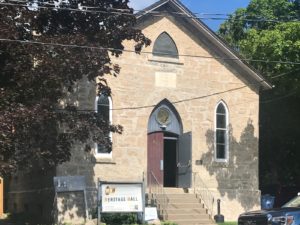
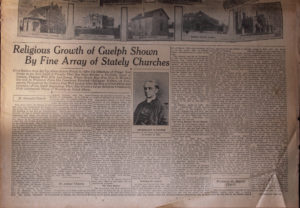
The tour starts at 83 Essex Street. According to an article written by Cameron Shelley, since 1880 the British Methodist Episcopal (BME) Church has resided here, acting as the focal point for the Black community in Guelph.
Many members of the church were originally fugitive slaves who reached Canada through the Underground Railroad and the BME Church created a space in Guelph for these individuals to take refuge. Many Black individuals were segregated from the white community and were forced to create their own churches, educational institutions, and community, as stated by Linda Brown-Kubisch in The Queen’s Bush Settlement (2004). Therefore, the BME Church allowed the Black community to form a support network, and connects a specific space to the Black community within Guelph.
Since 2012, the BME Church building, now renamed Heritage Hall, has housed the GBHS, which works to “preserve the historical significance of the BME Church by creating a cultural, historical and social centre within Guelph and Wellington County,” as stated on their website. GBHS hosts events and presentations to help people learn about Guelph’s Black history, while also renting out their space for other community activities. The building has thus remained an important staple of Black heritage in Guelph.
The Guelph Collegiate Vocational Institute: the Jewell family children and “Brotherhood Week”
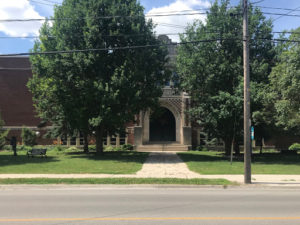
From the BME Church, walk north for approximately 15 minutes to the Guelph Collegiate Vocational Institute (GCVI) at 155 Paisley Street. This is where we will introduce the Jewells, a Black family who called Guelph home from approximately 1870 to 1980, and whose historical presence can be traced back to multiple locations within the city. Furthermore, the Jewell children attended high school at GCVI.
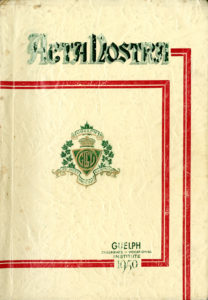
Siblings Melba and Theodore (Ted) Jewell are mentioned in the 1950 edition of the GCVI yearbook, Acta Nostra. During this year, 17-year-old Melba would have been in Grade 10 or 11. In a 1998 interview with the Guelph Social History Project (available as an audio file at the Guelph Civic Museum) Melba discussed her high school years, detailing her lively social life during this time. She and her siblings were actively involved in extracurricular activities including sports and school plays. Her brother Ted was President of the Students’ Council in 1948, as stated in an article published by the Globe and Mail (available through U of G library sign-in).

As discussed in her 1998 interview, Melba’s school experience was not without its issues, as she and her siblings faced discrimination throughout both middle and high school. Melba further explained that few Black students attended GCVI with the Jewell children, who were the targets of racist comments from other students and even teachers. The Jewell family was a primary source of support against this discrimination. Melba’s mother visited the school many times in an effort to educate the staff and compel them to address this mistreatment properly. However, Melba’s father took a different approach, teaching his children how to fight. This meant that the Jewell siblings got into physical altercations with some of their peers, and had to make trips to the principal’s office.

Furthermore, as detailed by Arthur Cole in a 1948 Globe and Mail article (available through U of G library sign-in), initiatives such as “Brotherhood Week” had been created in order to promote religious unity and a more general sense of acceptance and diversity within the community. This city-wide event was led by the “Guelph Brotherhood Committee,” a group of three men who each identified with, and represented, a different religious perspective: Jewish, Roman Catholic, and Protestant.
According to Cole, Brotherhood Week included speeches, meetings, programs and services which were carried out in churches, schools, and other community organizations with the aim of bringing “the theme and the full import of its meaning into every Guelph home.”
During Brotherhood Week, students provided narratives detailing cooperation between children of different races and nationalities. Cole cites Melba Jewell (then aged 14, attending Guelph Central School) as a student who contributed one such narrative, having written an essay on the importance of “brotherhood.” According to the article, Melba advocated for racial equality; when defining the meaning of brotherhood, she wrote that “it means everyone is equal to any one, without regard to their color, their nationality or their religion.”
The complexity of the relationship between Black Canadians and the rest of the community is evident in the experiences of the Jewell family. Acceptance and discrimination occurred simultaneously in Guelph. The Jewell family responded to this discrimination by advocating for themselves and others, and these documented accounts prove that the Jewell family used their voices in the community in order to promote acceptance among different races and religions.
81 Norfolk Street: The original Jewell family home
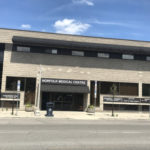
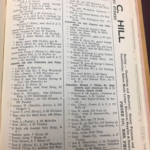
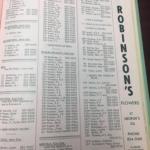
From 155 Paisley Street, walk 10 minutes east to the Norfolk Family Medical Centre, which now takes up the entire block where 81 Norfolk Street once was. According to the Vernon’s Guelph Directory from 1941 and 1972 (pictured above), up until the 1980s the Jewell family home resided here. The house was owned by Percy Cornelius Jewell and his wife Margaret Ada Brooks Jewell, who lived there along with their four children: Melba, Percy, Patricia and Ted.
The Jewell family has a history of over 150 years in Guelph and in the surrounding area. According to the “Emancipation Day Walking Tour” created by Woodlawn Memorial Park, Percy Cornelius’ mother, Ellen Jane Lawson Jewell, came to Guelph in the late-1800s from the Queen’s Bush Settlement. Her grandfather, Henry Dangerfield Lawson, escaped slavery in the U.S. and settled in the Queen’s Bush. Upon moving to Guelph, Ellen Jane married a white Englishman named William Arthur Jewell. The couple was married in 1899 and had four children: Ina Henrietta, William Arthur, Percy Cornelius and Douglas Nelson. This family marks the beginning of the Jewell’s presence in Guelph, and their connection to the city’s Black and white communities.
What is the Queen’s Bush Settlement?
The Queen’s Bush Settlement is a significant part of Guelph’s local history. During the majority of the 19th century, beginning around 1820, many Black residents from the U.S. migrated to Queen’s Bush, land which we now refer to as Wellington County. According to Benjamin Drew’s The Narratives of Fugitive Slaves in Canada (1856), the belief at the time was that Black people could escape the discrimination they faced in the U.S. if they were able to find refuge in a more accepting country.
In The Queen’s Bush Settlement, Brown-Kubisch claims that the Queen’s Bush was one of the largest Black pioneer settlements, formed around the year 1820. At its height, the settlement contained approximately 1500 fugitive slaves, free Black people, and other Black individuals and families who worked the land. Brown-Kubisch further attributes the large congregation of Black people in this area to its location as a stop along the Underground Railroad.
The community had its own issues to face as well, seeing as the land the settlement inhabited was neither owned by them nor the Canadian Government. Meetings were organized by the clergy, on behalf of the community, in order to inquire about an extension of their grant to the land, but all inquiries were denied because the land had not been surveyed yet (i.e. the government did not know if they could make use of it beyond giving it to their Black communities). Once surveyed in the 1840’s, the land was very difficult to buy back from the surveyors, and thus the Queen’s Bush Settlement slowly died out.
Although many residents left the Queen’s Bush following the land survey and settled closer to the City of Guelph, some remained in the Queen’s Bush well into the latter half of the 19th century.
95 Macdonell Street and 22 Toronto Street: Introduction to the Bollen family

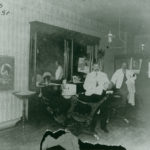
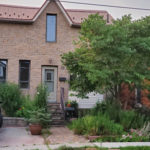
Before arriving at the last location, walk east for seven minutes to 95 Macdonell Street, where Charles Bollen’s barber shop once stood. From there, walk another 10 minutes east until arriving at 22 Toronto Street, the former Bollen family home. The last stop of the tour will be devoted to exploring the history of Charles Bollen and his family.
The Bollen family was a prominent interracial family in Guelph during the end of the 1800s and beginning of the 1900s, consisting of both Black and white family members. While there was clear racial division in the 20th century, there were also moments of integration between the Black and white communities, as demonstrated by this family. According to the Statistics Canada 1911 Census, the family home was located at 22 Toronto Street, where Charles Bollen and his wife Eveline Bollen lived with their 13 children throughout the years.
The census further shows that all family members are documented to have been born in Ontario, but Charles’ parents descended from the U.S. and Eveline’s from the U.S. and Ireland. This part of the Bollen’s lineage is significant because Eveline’s maternal side was natively Irish, and while her paternal side is vaguely documented as originating in the U.S., all of the Bollen family members, including Eveline and Charles, have their race documented in the 1911 census as ‘African’. Undoubtedly ‘African’ is an insufficient term to describe race, especially when comparing the Bollen family’s documented race and their documented lineage alongside photographs of the different family members.
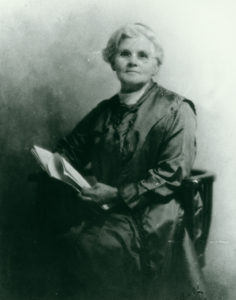
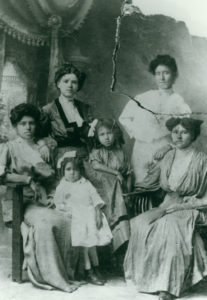
Charles L. Bollen also owned and worked at a barbershop at the Royal Hotel block, the site of Guelph’s previous Market Square, providing for his family for most of his life, while two of his sons (Junious and John) were documented as laborers in the 1911 census. The block where Charles L. Bollen’s barbershop once stood is just down the street from where the current Market Square space resides today.
The Bollen family also had ties to other Black families in Guelph. According to a 1924 marriage license accessible online through Ontario Marriages (account required), Rita Bollen, one of the children, married into the Stickland family when she married William (Bill) Stickland on Sept.13, 1924.
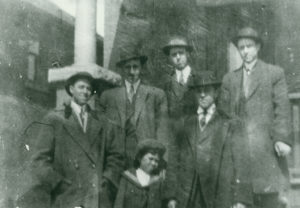
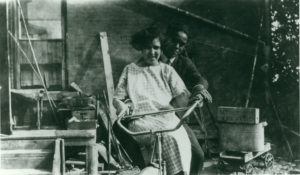
The Bollen family home is the last stop on the historical walking tour. We hope you learned something new about Black presence in Guelph. We encourage you to consider the spaces we inhabit and to reflect upon their origins. Be avid in your efforts to seek out resources that will educate you on Black history in Canada. The best way is to start locally by visiting the Guelph Black Heritage Society, attending their events, and supporting Black owned businesses in the city. By showing support and making the effort to learn and discuss the history of Blackness in our country, as a community we can open up more space where Black voices are acknowledged and encouraged. History directly relates to the present, and if we only recognize dominant narratives and exclude alternative perspectives, what remains is a limited view of who and what comprises Canadian society. By acknowledging under-represented histories and including them in our conversations, we bring Canada closer to being a truly inclusive place.
Coauthors: Alexandra Gristey, Karlie Castle, and Taylor Brown
Thank you for publishing this. I learned a lot from it.