
From technical advances in the kitchen to the perseverance of family traditions, cookbooks of the past show that food culture does not have an expiration date

A special collaboration between students in a third-year University of Guelph food history course and the university’s Archival and Special Collections team has yielded an exhibit showcasing Canadian cookbooks published between 1831 and 1985.
“From Our Mothers’ Kitchens: Cooking in Rural Canada” is a showcase of 27 cookbooks representing the cooking practices of women in rural and agrarian communities across Canada, from every province except Alberta and P.E.I.
More than that though, the exhibit is a reflection on how food culture over the past 160 years has shaped, and continues to shape, our lives today.
“It really opened my eyes to what a big part food plays/played in our culture and life,” said third-year agriculture student Amanda Hermans to The Ontarion. Hermans was one of the student curators of the exhibit.
“Cookbooks tell us so much more than how to create a recipe.”
U of G History Professor Rebecca Beausaert, who taught the food history course, echoed this sentiment, elaborating that the cookbooks in the exhibit can offer a lot of commentary about what was going on in Canada at the time that they were published, such as the kind of skills cooks were expected to have.

“Historical cookbooks often assumed that the reader was well-versed in the basics of cookery and skipped over several steps in the preparation method,” said Beausaert to The Ontarion.
“Most, also, did not include images of the prepared recipes. Modern-day cookbooks, depending on the genre, typically guide readers through the process more carefully by including beautiful imagery and providing helpful tips and hints for the novice cook.”
According to Beausaert, readers can also see the gradual shift in cooking technologies as kitchen appliances and gadgets became more refined over the years.
“The introduction of appliances like stoves and ovens, refrigerators, and freezers, as well as new cooking implements like measuring cups, simplified the cooking process tremendously,” said Beausaert.
“With more efficient and reliable cooking mechanisms, Canadian cooks were able to save time and money. The range of cookbooks in the exhibit really demonstrate these shifts; we have older books where recipes say little more than ‘cook in a moderate oven’ and then more recently published ones that instruct cooks to use microwaves.”
In addition to the technical evolutions we see across preparation guides and cooking technologies, Beausaert noted that cookbooks can reveal traditional social constructs as well.
“The Wise Wives Keep Husbands Happy book, published in 1925, provides a really interesting perspective on marriage at the time. The 1920s is often viewed as a really progressive decade, but as the book’s title and contents indicate, marriage and housekeeping were still considered women’s ideal vocation in Canadian society.”
Some cookbooks also showed how food traditions travelled across the world and were shared and adopted by different groups of people.
Fourth-year nutritional science and international development student Kiana Gibson learned how the people of Nova Scotia were introduced to British pudding through migration.
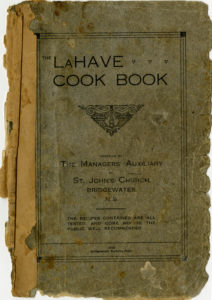
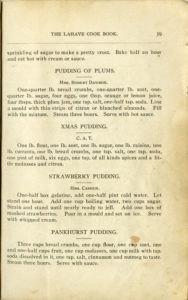
“The LaHave Cookbook (1912) features multiple versions of pudding, which is a British term for a cake batter stuffed in a cloth bag and steamed in a pot of boiling water,” said Gibson to The Ontarion.
“It originated in 16th century England, traditionally called Christmas or Plum Pudding. In 1913 alone, over 113,000 English immigrants arrived in Canada, many of them taking up residence in the Maritime provinces – so, this recipe showcases the British influence in Nova Scotia.”
Gibson was also able to learn about some of the women who had contributed recipes through the 1911 Canadian federal census. For example, she identified Miss Myra Manning, a 32-year-old schoolteacher living with her parents and brother on Cape Breton Island.
“This really reiterated the notion for me that these are real people behind these cookbooks, which is something that’s easy to forget when you’re scrolling through virtual pages of a lifeless object,” said Gibson.
Hermans was able to contact some of the family members of the author and compiler of Wonderful Goot! Favourite Mennonite Recipes (1965), the cookbook she researched.

“All parties were surprised that the cookbook held such significance and was being looked into years later,” said Hermans. “I think it brought joy to all to reminisce about the events surrounding its publication, and joy for the fact it wasn’t just a lost artifact in history.”
Other students who took part in the exhibit were able to make connections between recipes in their cookbooks and their own family traditions.
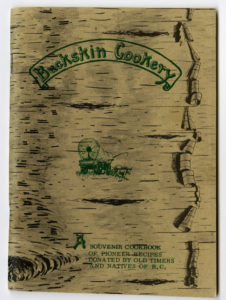
For example, fourth-year international development student Lillian Smedley researched the Buckskin Cookery: A Souvenir Cookbook Compiled of Recipes Donated by Old Timers, and Natives of B.C. (1957), and found that the book’s tips for cooking wild game resonated with her.
“I’m from Wawa … in Northern Ontario, and I grew up doing a lot of fishing and hunting. So a lot of these recipes were very applicable to my lifestyle and my family’s lifestyle.”
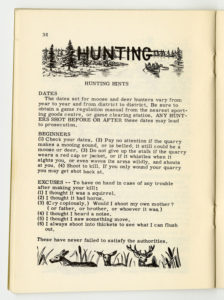
Although she hasn’t had the opportunity to use any of them yet, she says “there are definitely a couple of the recipes and tips and techniques that are shared in this cookbook that I fully plan on using throughout the rest of my life.”
Hermans has Dutch ancestry on her dad’s side of the family and found that after making the Black Gingersnap cookies in Wonderful Goot! they were very reminiscent of traditional Dutch speculaas cookies that her family enjoys. She plans to try more recipes from the book in the future.
As for Beausaert’s plans, she hopes to help students “curate more exhibits that highlight cultural diversity in Canada, including cookbooks written by or for Black, Indigenous, and people of colour. I would also like to see a bilingual exhibit that showcases the history of French-Canadian cooking styles.”