
Passionate chants from people of every race filled the core of downtown Guelph on June 6. Thousands of face masks and signs could be seen as a diverse community came together in solidarity. During that sunny afternoon, everyone had one voice – and it was against police brutality and violence toward Black, Indigenous, and People of Colour (BIPOC).
The protest was planned to take place within Market Square outside of Guelph’s city hall. However, people spilled out onto the surrounding streets as they joined together to support the Black Lives Matter movement.
“This is our time to do this over and over again until our voices are heard and our voices are taken seriously,” said Kayla “Kween” Gerber, organizer of the event and representative of the Guelph Black Heritage Society (GBHS).
“It’s time to answer the call of our members, allies and hearts and move forward together. We need to see results.”
Gerber said the GBHS has been around since 2011. Before 2011 it was maintained as a heritage home, built in the 1880s by former slaves looking for refuge in Guelph along the underground railroad.
The building has been a cultural safe haven for those in the Guelph community and Wellington area.
“This is our time to do this over and over again until our voices are heard and our voices are taken seriously. It’s time to answer the call of our members, allies and hearts and move forward together. We need to see results.”
— Kayla “Kween” Gerber
Along with fellow organizers Tara Alexander and Desiree Fekete, Gerber researched proper public health guidelines and had several stations set up with extra hand sanitizer and face masks for those who didn’t bring their own. The event was also live-streamed for people who were unable to attend, and everyone who was displaying COVID-19 symptoms was asked to stay home.
“Balancing protesting and public health during this unprecedented time is not easy,” said Dr. Nicola Mercer, of Wellington-Dufferin-Guelph Public Health, in a statement. “The provincial State of Emergency is an important tool in protecting all of us from the spread of COVID-19. The right of people to peaceably assemble is a fundamental part of a free and fair society.”
In addition to sanitizing stations, other stations were available to the public including first-aid, information about the GBHS, art supplies to create signs, and one for offering emotional support to BIPOC community members.
The event kicked off with a land acknowledgement by Xicotentacl Maher Lopez, who touched on his own experience as an Indigenous person.
“As an Indigenous person, fighting for Black justice and Black sovereignty and rights is one of the most important things we can do for solidarity,” Lopez said.
“Any human being with any morality should be standing up for the injustice faced by the Black community.”
Natalie Ann, a student from the University of Guelph, was one of many performers included in the event. Her spoken word piece focused on her experiences with privilege as someone who is of mixed race, and how the colour of her skin shapes the way society views her.
“I had the privilege to grow up in a home where white – my mother, and Black – my father were one in the same,” Ann said in her speech.
“I was privileged to live in an environment where Black and white weren’t separated, but mixed to create the beautiful colour on mine and my brother’s skin… But as soon as I stepped outside the door of that childhood home my privilege changed.”
Other speakers included Marva Wisdom from the GBHS, singer Tracy Cain, and spoken word performers Audny Stewart and Justin Reid.
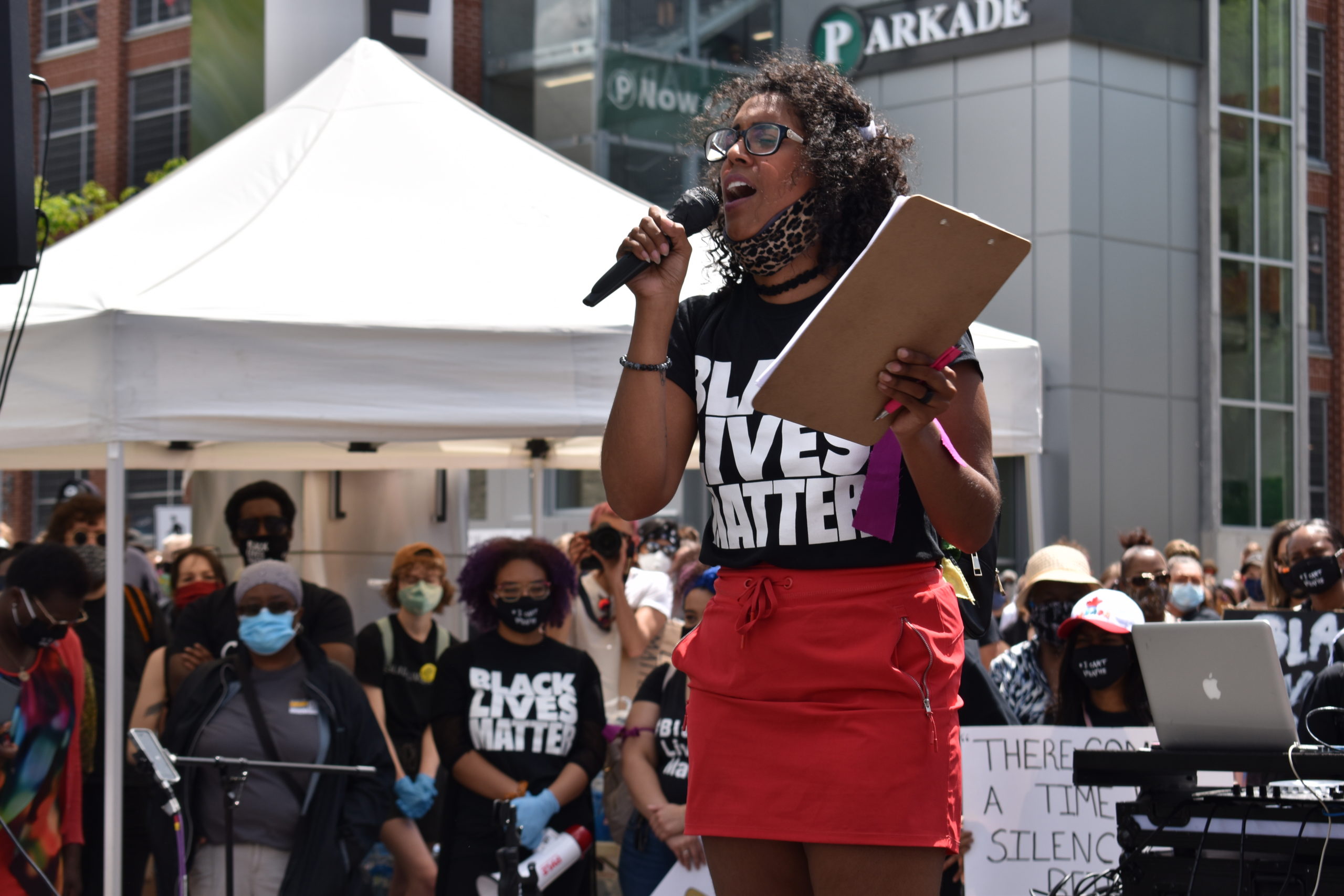
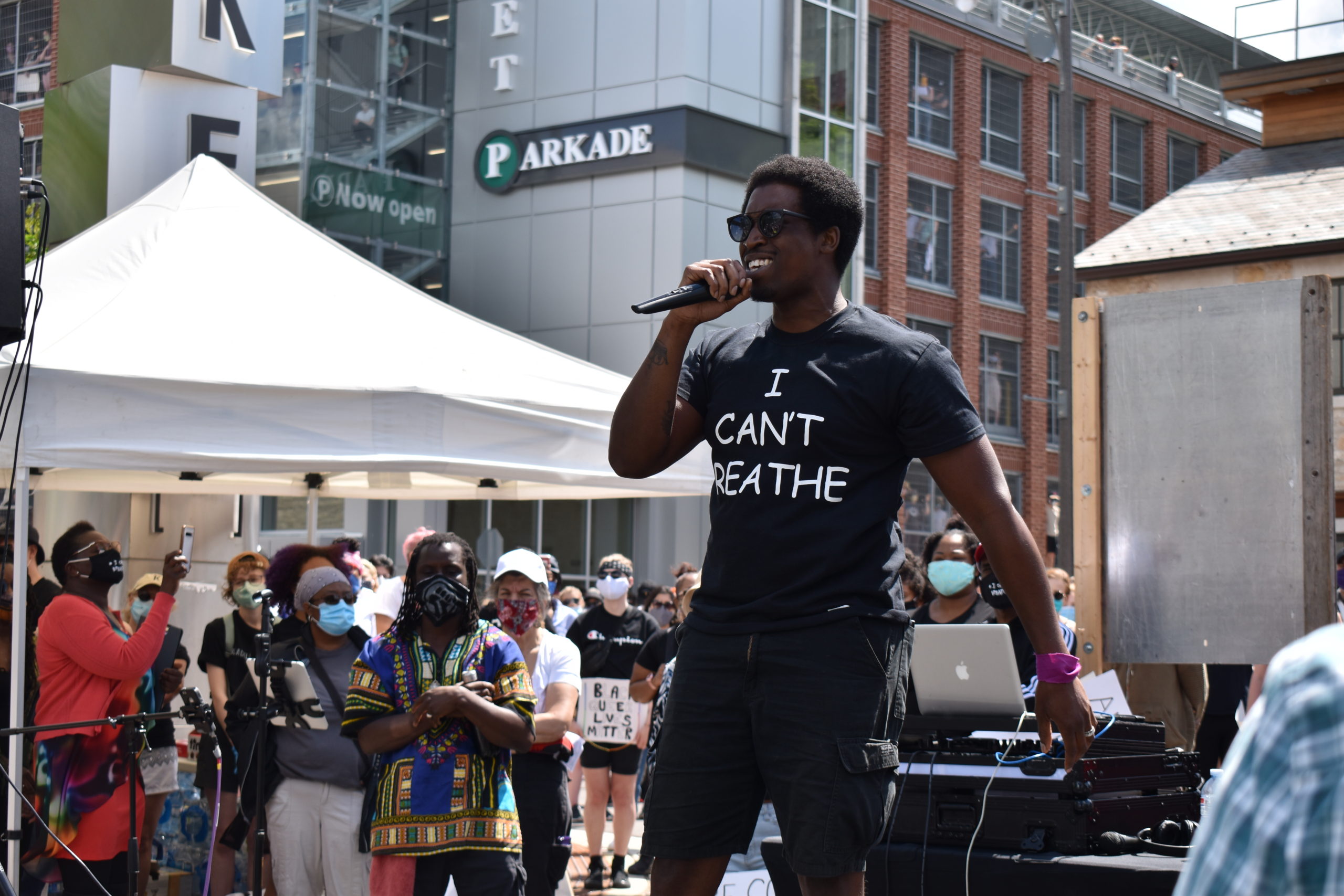
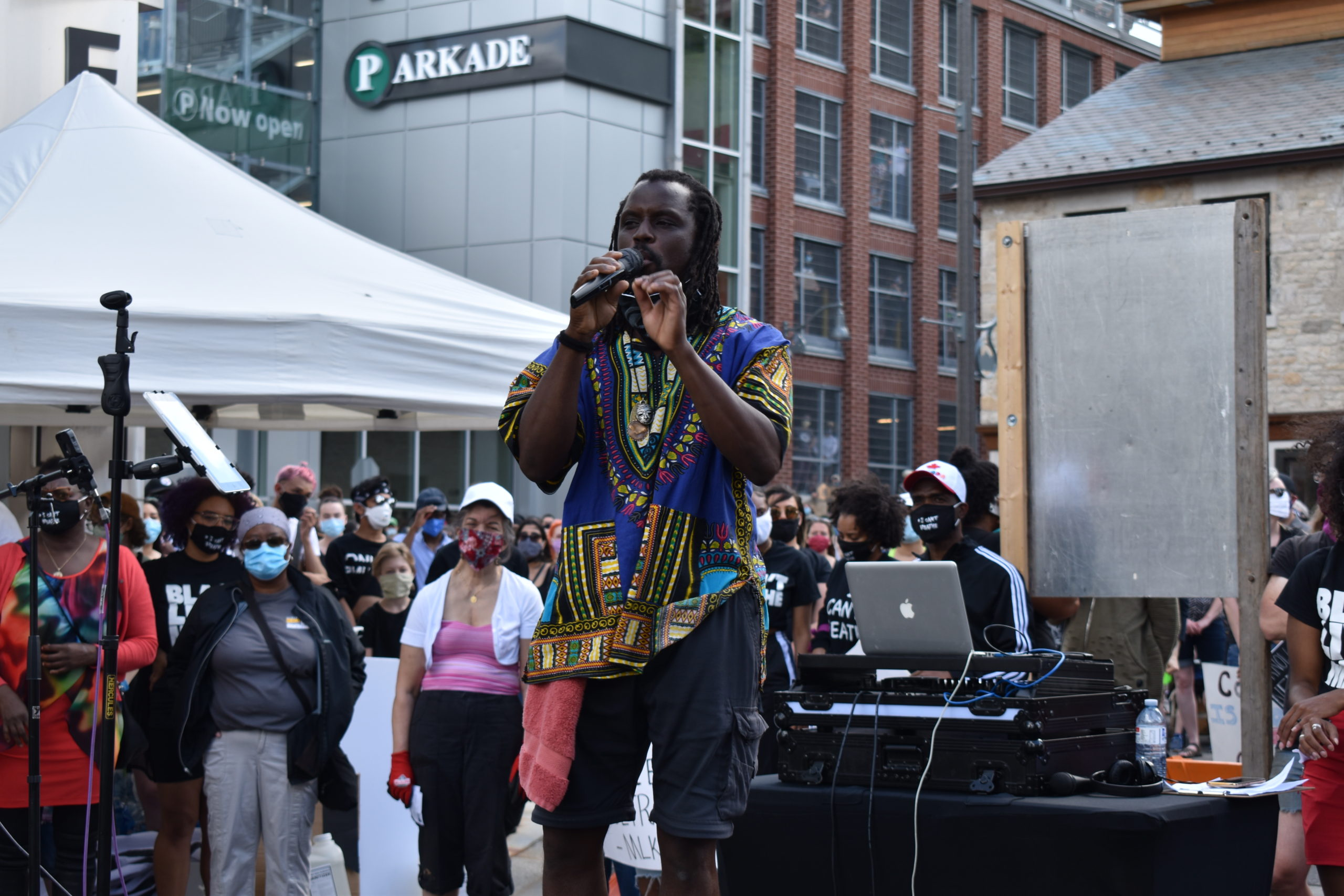
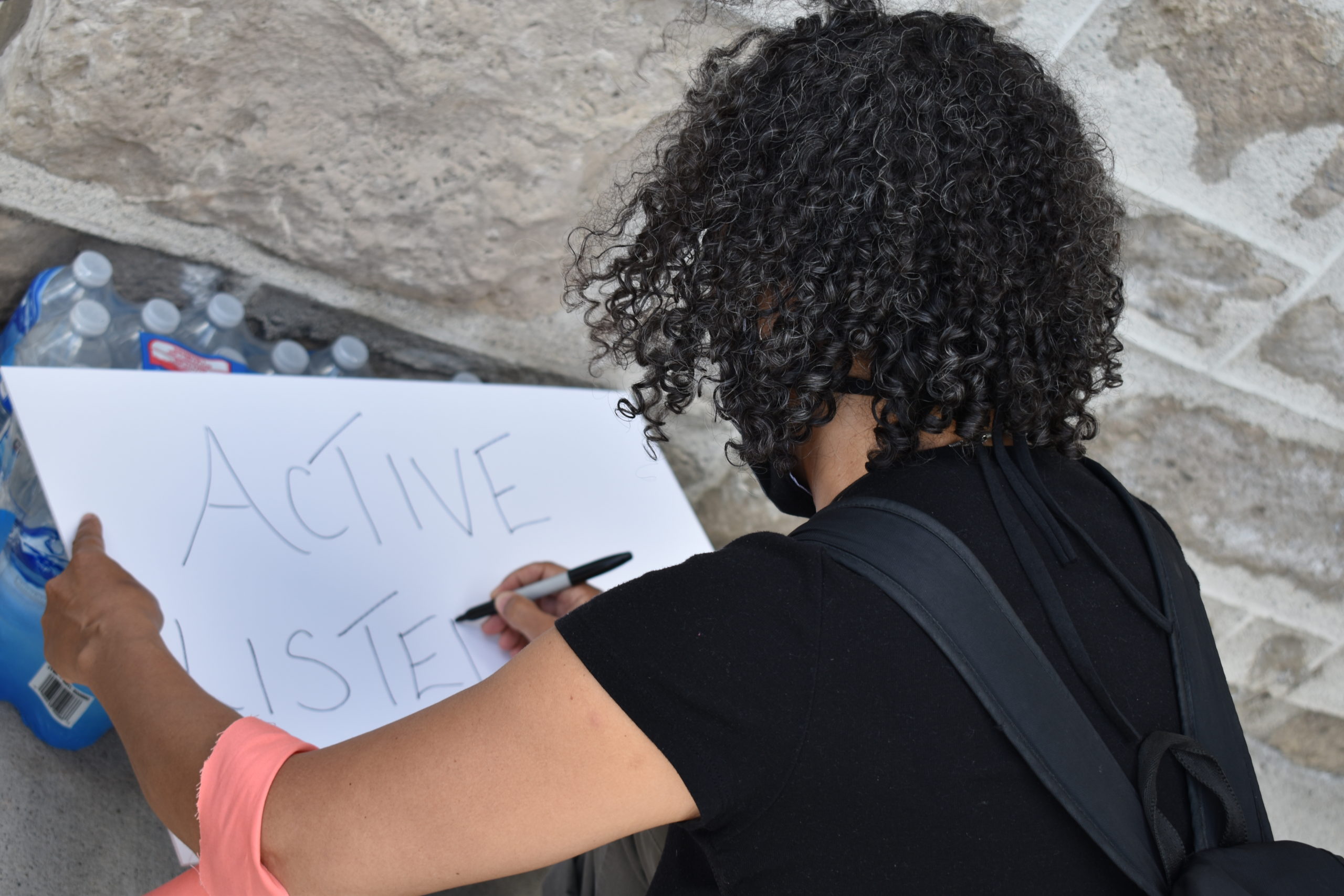
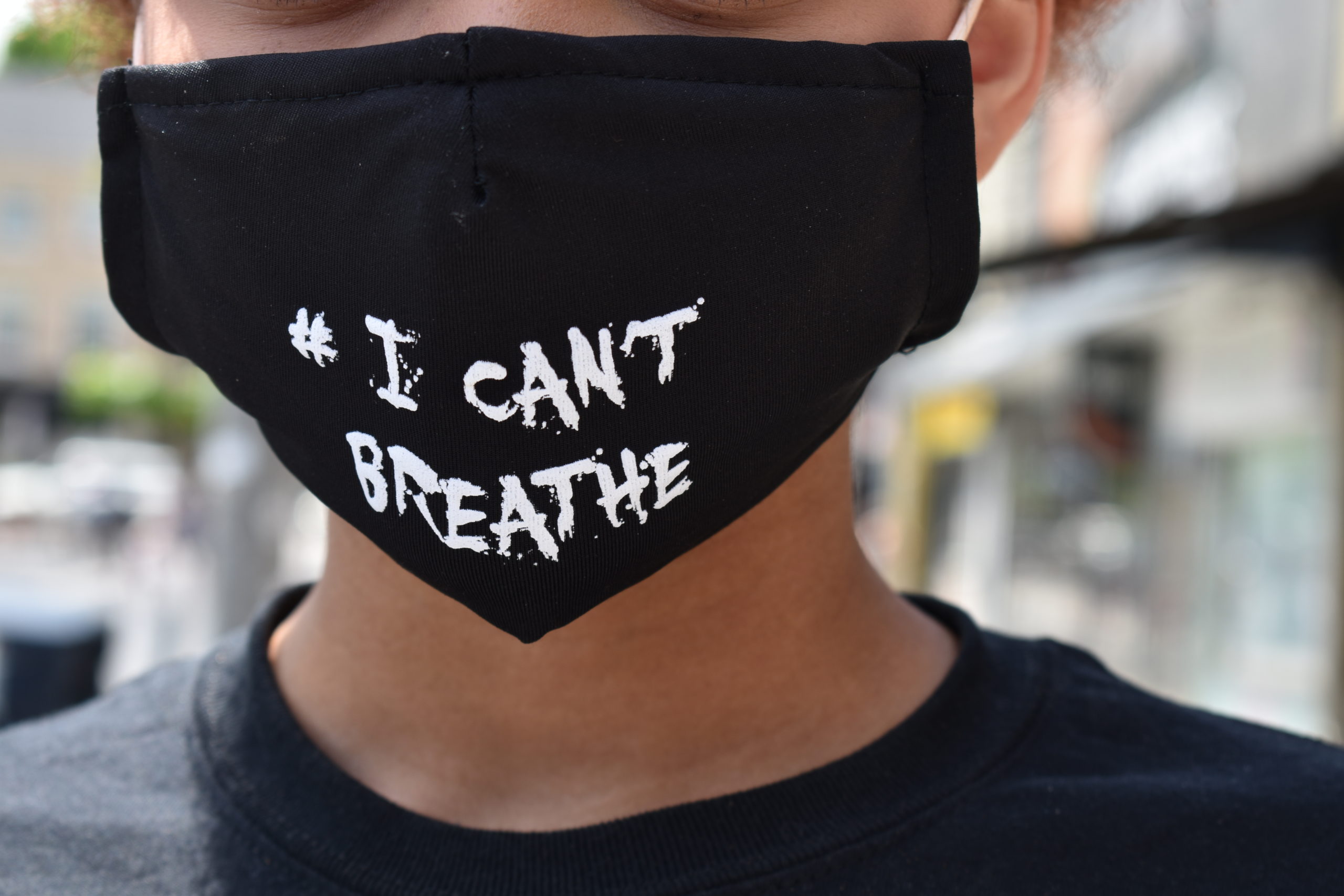
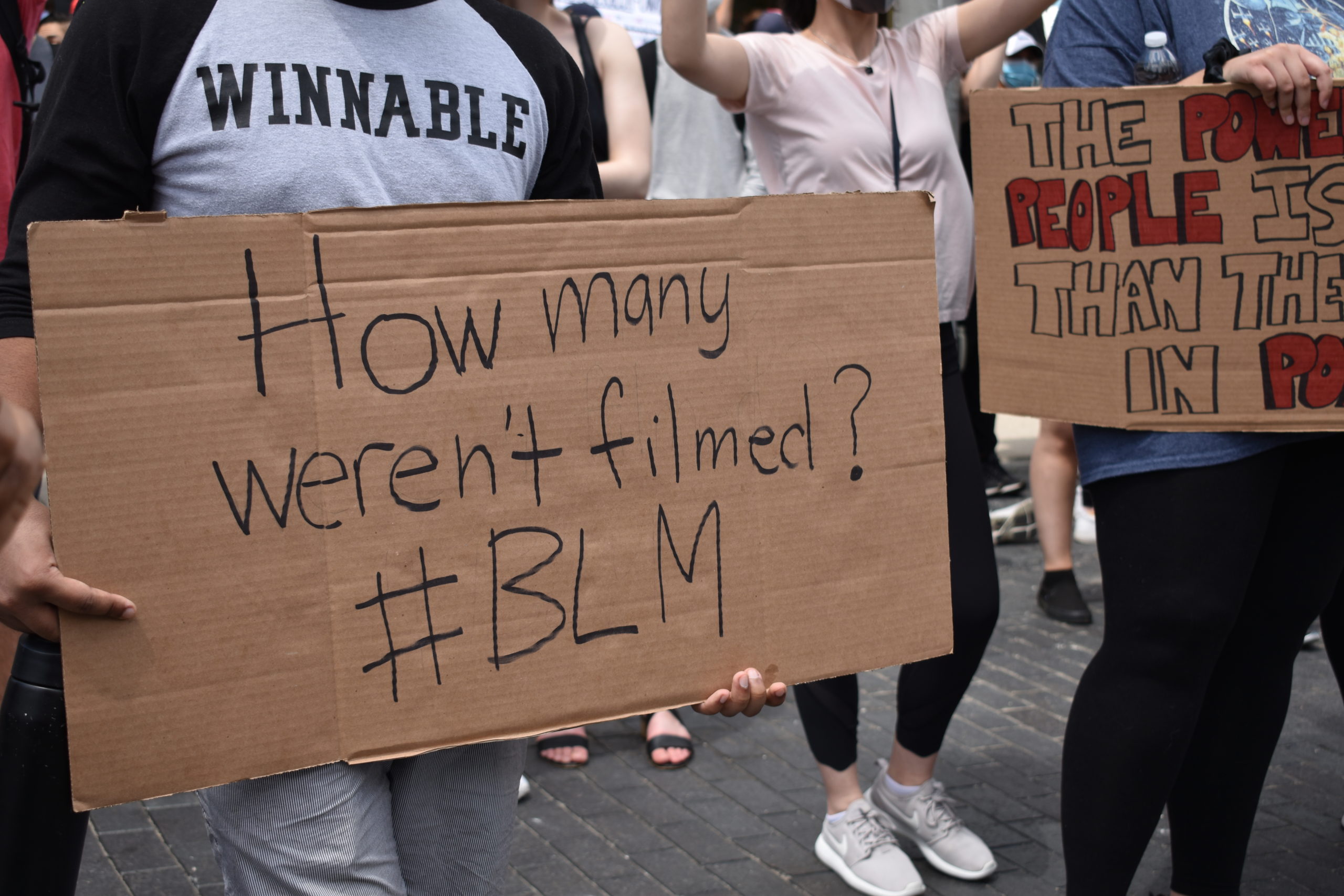
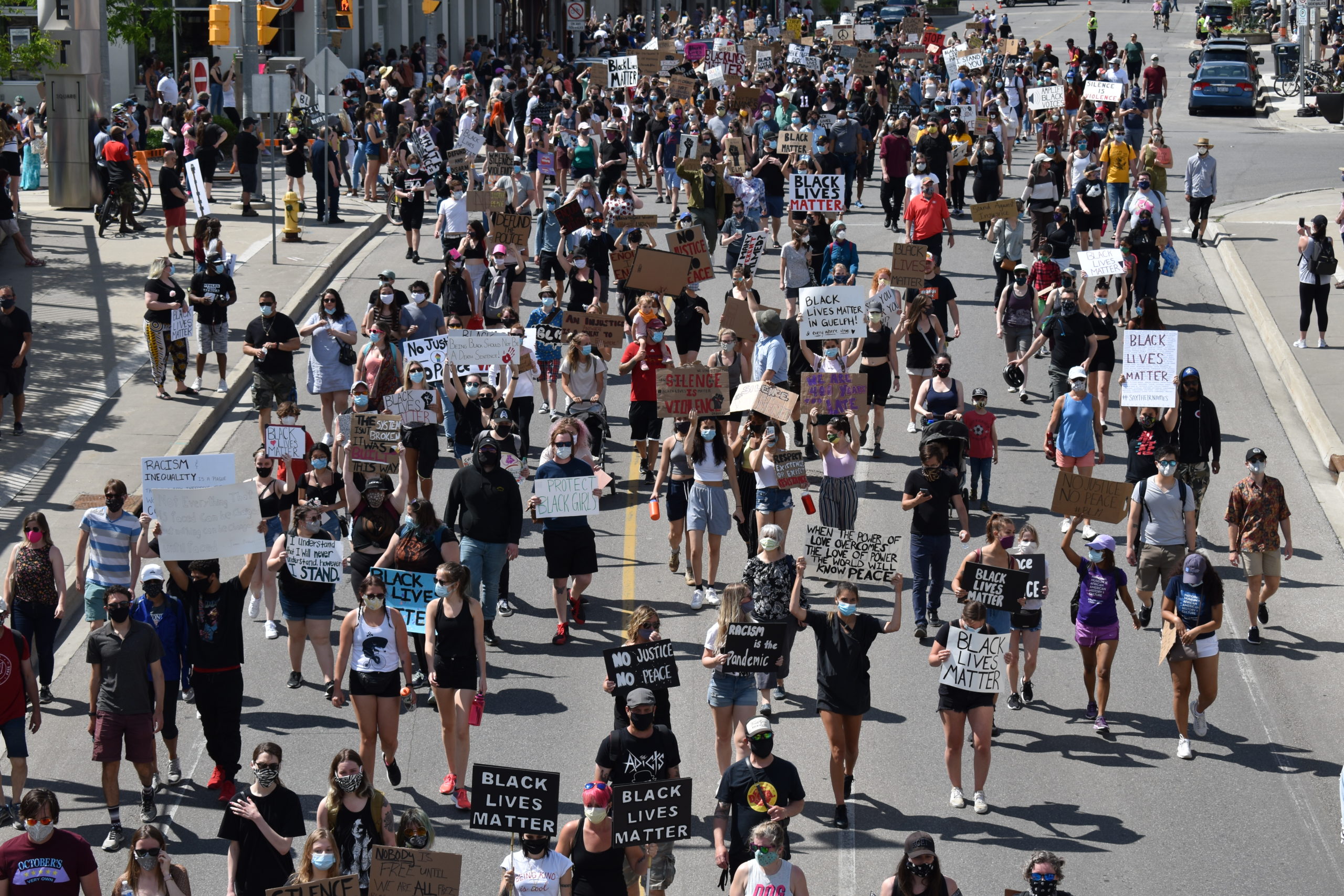
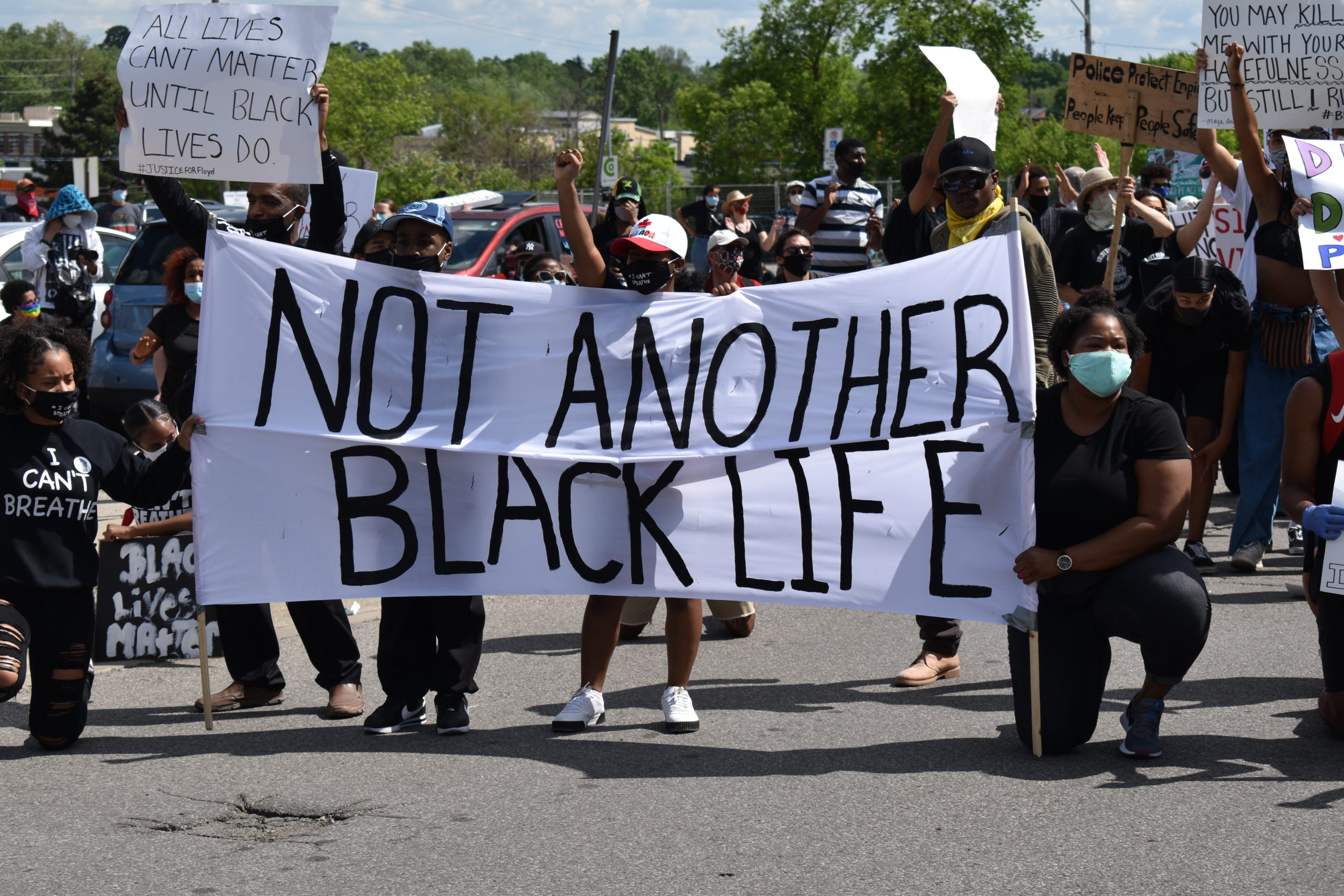
(Photos courtesy of Taylor Pipe/The Ontarion)
Before marching on to the Guelph Police Station, musician Andrew Craig sang an original song focused on the injustices faced by the Black community. The crowd joined Craig in singing the chorus and dancing along to the beat.
“We’re 60 years past that (the civil rights movement of the 1960s), one would have hoped that something more substantive would have occurred in that time,” Craig said.
“I think all of our ancestors who marched in the 60s hoped for more than we’ve had. The fact that we now need to come together to battle these types of things that are still so prevalent is disquieting.”
Among the protesters was Victoria Di Caro, a student at the University of Guelph, who was passionate about marching for the movement.
“It’s kind of saying I’m proud of who I am,” Di Caro said. “Despite everything going on in the world – all the injustice, racism and prejudices – I am still a strong Black woman that will stand here and march here for what everyone on this whole planet should have: equality, justice, freedom and peace.”
Although many voices were heard throughout the duration of the protest, one local political figure was notably absent – Guelph Mayor Cam Guthrie, who did not attend and released a statement following the protest:
“I’ve received many emails asking why I support today’s gathering,” said Guthrie. “The answer for me, is simply that everyone has a right to protest; our freedom of expression and speech is protected in the Charter of Rights and Freedoms. Furthermore, the crisis of anti-Black and anti-Indigenous racism, and the oppression of people of colour, is in itself a deadly virus that transcends our current climate.”
“Despite everything going on in the world – all the injustice, racism and prejudices – I am still a strong Black woman that will stand here and march here for what everyone on this whole planet should have: equality, justice, freedom and peace.”
— Victoria Di Caro
The organizers requested that Guthrie not attend to keep the focus of the protest on the BIPOC voices of those facing hate and oppression.
The Guelph police force was also not in attendance – with the exception of a few officers from BIPOC communities to ensure crowd safety.
“We need to find solutions together, and I thank the community on behalf of the Guelph Police Services Board for voicing your concerns, and for your willingness to work together with us to address the changes needed to end racial discrimination and injustice,” said Robert Carter, Chair of the Police Services Board, in a statement.
“What happens in this moment of time will have long-lasting impacts toward a safer and more inclusive community.”
Although the protest was a day focused on the lived realities of BIPOC communities, there were also white attendees who came to show their support.
As the only white organizing member, Alexander said she feels that white people need to know that they really don’t understand what the Black community goes through and that there needs to be education because there is a lack of knowledge in the white community.
“(This protest) has been a way for me to show a lot of my friends who are white that this is something that’s important to me,” Di Caro said.
“(The Black Lives Matter movement) is something that I hope people understand is not a trend or fad, or cool on social media. It’s something that is extremely relevant and significant.”
Di Caro also mentioned a couple of ways that members of the white community can be allies to BIPOC communities, such as: educating yourself, taking action when you see injustices happening to people of colour, and using white privilege to protect people of colour.
“Your white privilege is your power, and that’s a power I’ll never be able to have,” Di Caro said.
The protest left many BIPOC community members with feelings of hope that these marches and protests will ignite real change in their communities.
“It’s a movement for everyone and we all need to act in unison,” Di Caro said. “I really hope people take from this that no one is saying one race is better than the other or that white people are bad. Nobody is saying any of that. It comes down to how can we live and coexist and give everyone access to live a fully fulfilled life.”
Please visit www.theontarion.com/submit to find out how you can share your work with The Ontarion.